


THE LONDON TORSO MYSTERY OF 1887 — THE BODY PART THAT WHISPERED “RIPPER” BEFORE THE RIPPER EXISTED


In the autumn of 1887, a full year before Jack the Ripper carved his name into London’s nightmares, the city was already holding its breath.
A workman on the Thames embankment made a discovery so grotesque, so inexplicable, that newspapers struggled to print the details without turning readers’ stomachs.
Wrapped in cloth and partially decomposed, a woman’s torso was found near the construction works by Scotland Yard — a location that would later become synonymous with the Ripper investigations.
The press erupted. The public panicked. And for a brief moment, London believed the killer who would later be known as “Jack” had already begun.
A CITY ON EDGE BEFORE THE STORM
Victorian London was a place of shadows — overcrowded slums, choking fog, and a police force still learning how to investigate violent crime. When the torso was examined, surgeons noted the cuts were precise, deliberate, and made with anatomical understanding. That alone was enough to send imaginations spiralling.
Rumours spread that the killer was a doctor. Or a butcher. Or someone who moved through the city unseen, choosing victims at will.
The newspapers — hungry for sensation — printed sketches of the discovery, each more dramatic than the last. Headlines warned of a “MONSTER AT LARGE”. The public whispered about a murderer who dismembered his victims and scattered them across the city like a grim puzzle.
THE FIRST FALSE SHADOW OF JACK THE RIPPER

When the Whitechapel murders began in 1888, many Londoners immediately connected them to the 1887 torso case.
The similarities were too chilling to ignore:
Female victims
Brutal dismemberment
Surgical precision
A killer who vanished into the fog
Even some detectives believed the same hand might be responsible.
But history would eventually separate the two. The 1887 case became part of what is now known as the Thames Torso Murders, a series of killings distinct from the Ripper’s spree — but no less horrifying.
WHY THE 1887 DISCOVERY STILL HAUNTS INVESTIGATORS
Unlike the Ripper victims, the torso woman was never identified. Her killer was never caught. And her remains were only one piece of a larger, macabre pattern stretching across the decade.
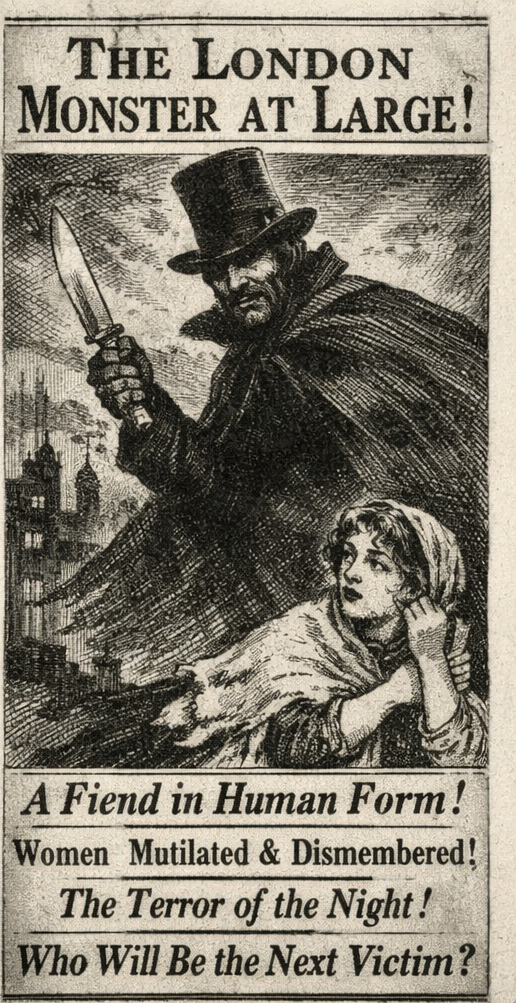
Modern criminologists often argue that the Torso Killer was more skilled, more organised, and far more dangerous than Jack the Ripper — a predator who left behind fewer clues and no letters, and who may have operated for years without detection.
The 1887 discovery stands as a grim reminder that London’s darkest mysteries didn’t begin — or end — with Jack.
It was the warning. The whisper before the scream. The shadow that arrived before the legend.


Comments